The fourth edition of ePicture This event will take place on 28 October 2026 at TU Eindhoven, building on the strong momentum of previous editions that have made it a key meeting point for the European imaging community.
Since its launch in 2023, ePicture This has steadily grown, attracting an engaged community of experts from leading organisations such as ASML, imec, Philips, Teledyne, TNO, TU/e and fostering high-quality discussions at the intersection of AI, sensor technologies and advanced imaging systems. This year’s edition expands beyond a project-focused workshop into an AENEAS Technical Day, organised by core partners from the Xecs projects ELEVATION and ENTERTAIN in close collaboration with AENEAS. This evolution reflects a wider ambition to connect projects, industry and research within the European semiconductor ecosystem, while maintaining the event’s strong technical depth.
The 2026 programme will feature:
- Three high-level keynote sessions structured around Processing, Capturing and Application
- Technical contributions from industry, academia and EU collaborative projects
- Renowned speakers from large companies, innovative SMEs and research institutions
- A strong focus on cutting-edge developments in imaging, AI and semiconductor-enabled applications
Beyond the technical content, this event is known for its interactive and dynamic atmosphere, where networking moments play a central role, offering valuable opportunities to exchange ideas, spark collaborations and connect across the European ecosystem.
The day will conclude with a Presentation Award and informal networking drinks, continuing a tradition that makes ePicture This not only insightful but also highly engaging and community-driven.
Want to know what to expect or revisit the highlights from previous editions?
Presentations and key takeaways are available here:
Registration
Welcome address, agenda, projects overview
Keynote presentation #1. Situational Awareness: Inside Out with CGI Indoor Explorer
by Bart-Peter Smit and Max van Schendel, CGI Nederland B.V.
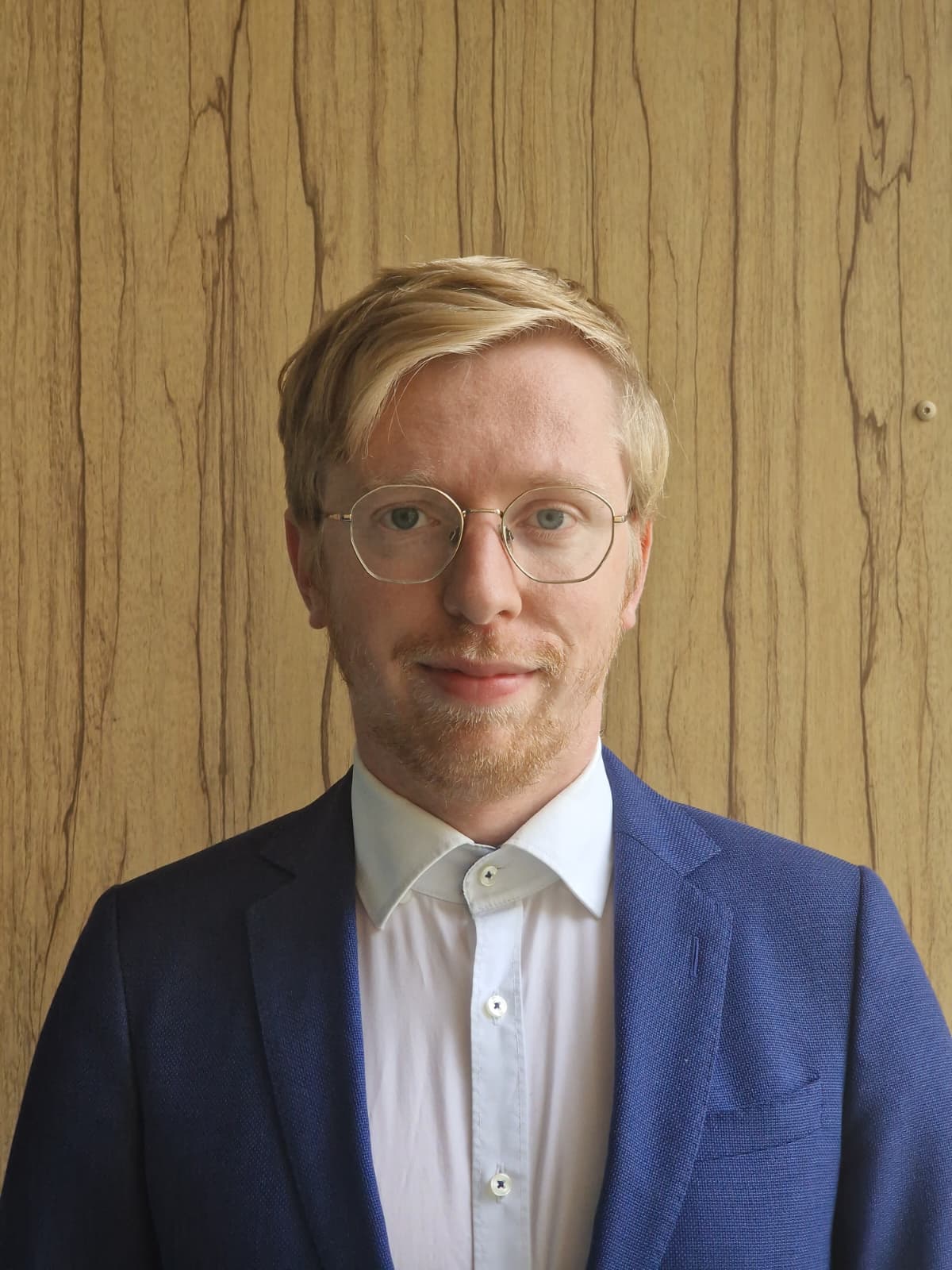 Bart-Peter Smit is a situational awareness specialist at CGI, where he guides development teams from a functional perspective in building innovative systems for the safety sector (Defense, Police, and Space). One of those teams is the CGI Indoor Explorer team, which builds a solution that enables first responders to build shared situational awareness in real-time within indoor environments, by real-time mapping and real-time tracking.
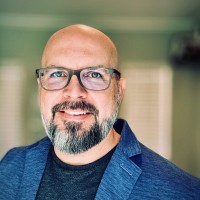 Max van Schendel is a software architect in the Defense unit of CGI. Max specialises in Geo-ICT, which he combines with AI and data engineering. As the architect of CGI Indoor Explorer he designed the system and now guides the team on the technical parts.
Abstract. Imagine entering a building you do not know. No reliable floor plan. No GPS. Limited visibility. Multiple teams moving at once. Every corridor, stairwell and room matters, but the picture is incomplete and the building is on fire. That is the challenge CGI Indoor Explorer is built for. Indoor Explorer turns movement through an unknown indoor environment into a live, shared common operational picture. Using visual-SLAM, the system can position first responders within incident buildings and map the environment at the same time. It does not need a perfect map in advance, but it builds a picture as the operation evolves. But this is not just about mapping. The real value is collaboration. Multiple users, platforms and sensors can contribute to the same indoor picture in real time. What one operator sees, others can use. What one sensor detects, the platform can fuse with other data. Step by step, fragmented observations become a shared view of the environment. Sensor fusion and computer vision builds towards that shared view, by detecting objects that are relevant to the mission objectives. That shared view is enriched through sensor fusion. Visual data, motion data, positioning information and additional sensor inputs are combined inside the platform to create a more robust and meaningful picture. Especially indoors, where GPS is unreliable or unavailable, this is essential. Indoor Explorer helps answer the questions that matter: Where are we? What have we already seen? What is changing? Where are the risks? What options do we have? We are actively working on sensor development to improve how indoor environments are perceived, even
Technical Presentations
- Seeing the Unseen: Real-Time 3D World Reconstruction - From Static Scenes to Dynamic SLAM by Yasaman Kashefbahrami, Eindhoven University of Technology. Abstract & Bio
Coffee Break
Keynote presentation #2. Is The Perfect CMOS Image Sensor Available Today?
by Albert Theuwissen, Harvest Imaging
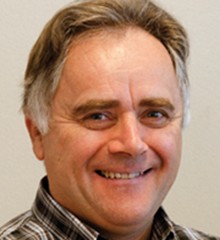
Albert Theuwissen received the degree in electrical engineering and his PhD from the KU Leuven (Belgium) in 1977 and 1983 respectively. In 1983 he joined Philips Research Labs (the Netherlands) and in 2002 he started working for DALSA, first as CTO of the company, later as chief scientist. He issued several patents and he is author or coauthor of 280+ technical papers, including a textbook "Solid-State Imaging with Charge-Coupled Devices". He acted as general chairman of the International Image Sensor Workshop in ’97, ’03, ‘09 and in ’15, and as International Technical Program Chair of the ISSCC2010. From 2001 till 2023, he was part-time professor at the Delft University of Technology, the Netherlands. In 2007 he left DALSA and founded Harvest Imaging. Since then he is fully focusing on training, teaching and consulting in the field of solid-state imaging technology. In the mean time over 300 technical courses, public as well as in-house, are being taught all over the world. In 2011 he received the Electronic Imaging of the Year Award, in 2017 he was elected as the President of the International Image Sensor Society.
Abstract. Looking at the performance of a today’s CMOS image sensor (quantum efficiency over 80 %, dynamic range over 80 dB, temporal noise below 1 electron, fixed-pattern noise below visibility, parasitic light sensitivity below -100 dB, etc.) one may conclude that the perfection is being reached. Does that mean that no longer new developments can be expected ? In this talk it will be explained that indeed for some characteristics the ideal image sensor is almost in our hands, but this is for sure not true for all performance parameters, even not for all the ones abovementioned. In some cases we are even fooling ourselves, and the perfect image sensor is much further away than we think. For instance quantum efficiency : 80 % only can be reached for black-white devices. In this talk a few performance parameters will be analysed in more details and suggestions will be made for further improvements. The good news : there are still great challenges ahead for the imaging engineers, we are not going to immediately lose our jobs.
Technical Presentations
Lunch Break
Technical Presentations
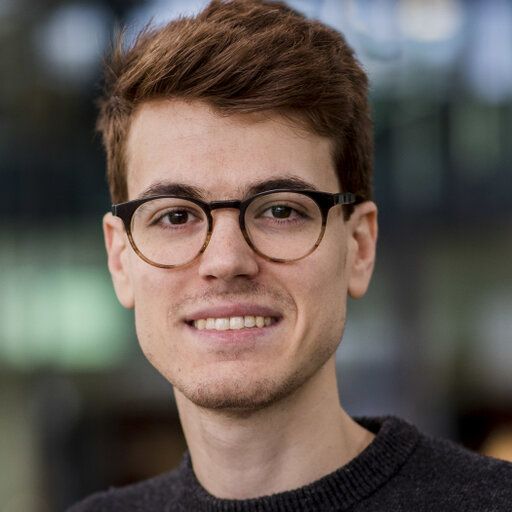
Keynote presentation #3. Shaping the Future of Imaging: Collaboration at the Limits of Technology
by Alessandro Caiazzo, ASML
Technical Presentations
- High-Resolution 3D X-ray inspection of advanced packaging semiconductor devices by Till Dreier, Excillum, Sweden. Abstract & Bio
Closing
Networking Cocktails & Presentation Award
Please note that participation is free of charge, but registration is required as places are limited. If your plans change and you are no longer able to attend, we kindly ask you to cancel your registration to allow another participant to join.
New to the AENEAS Events Platform? Kindly note that some time is required for the account verification and you will receive an email confirmation.
If you are interested in presenting your technical developments in Capturing, Processing or Application Imaging, please upload your abstract, using the template available in the AENEAS Events Platform, in the Project Idea section. Kindly note that the registration is required.